A potential client just got in a car accident, got arrested, or is staring down an immigration deadline. In that moment, they are not calling one law firm. They are calling three or four, and they are going to hire whichever one calls them back first. Everything else, your reputation, your case results, your years of experience, only matters to the firm that actually gets them on the phone.
This is speed to lead, and in legal marketing it is one of the most controllable, most ignored factors in whether a case gets signed at all.
The Numbers Should Worry You
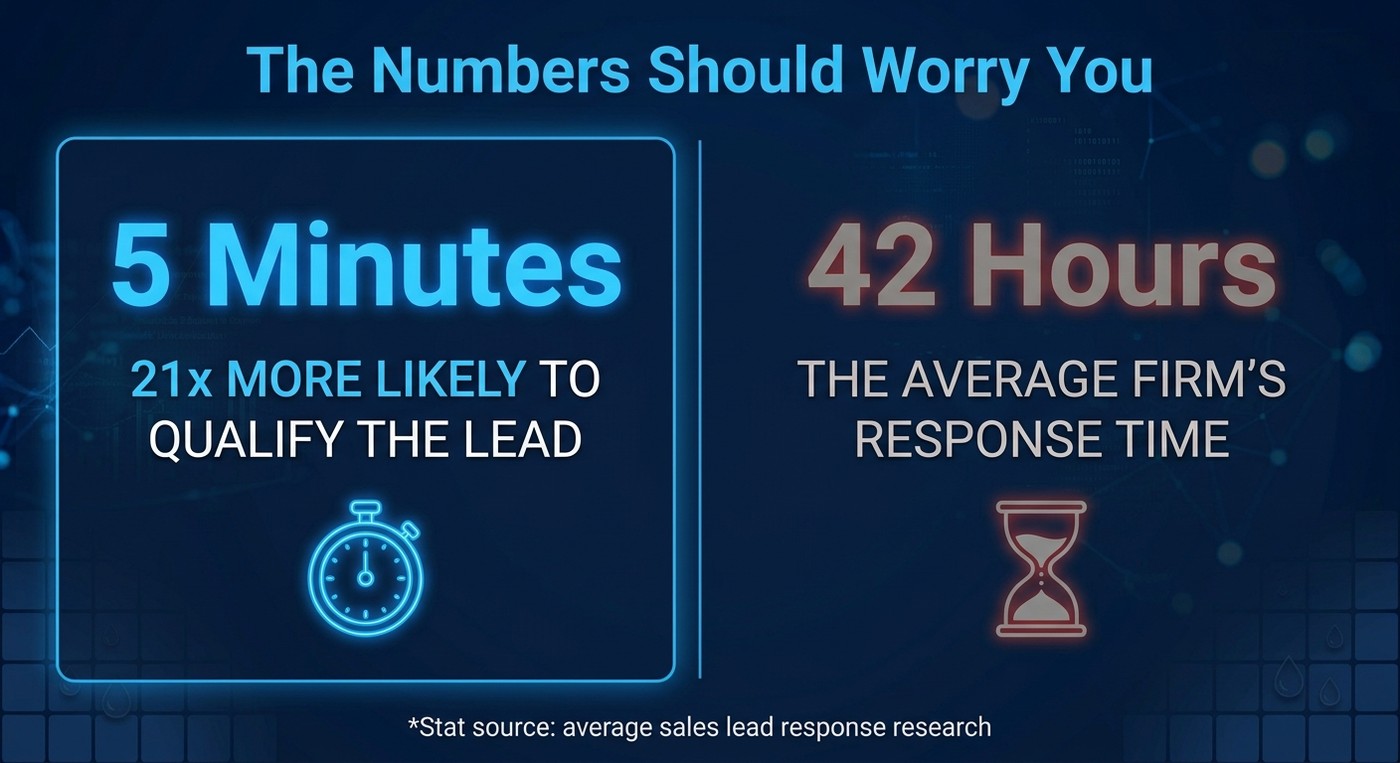
The research on this is not new, and it is not close. A landmark MIT and InsideSales study of more than 15,000 leads found that contacting someone within five minutes made a business roughly 100 times more likely to make contact and 21 times more likely to qualify that lead, compared to waiting just 30 minutes. More recent data shows 78 percent of customers hire the first business that responds to them, full stop, regardless of who else they talked to first.
Here is the part that should actually worry a law firm owner: the average business takes 42 to 47 hours to respond to a new lead. Only 7 to 23 percent of companies respond within that critical five-minute window. In a mystery-shopper study of 1,000 companies, 63.5 percent never responded to the lead at all.
If your intake process takes even an hour, you are not competing on the quality of your work. You have already lost the case to whichever firm picked up the phone first.
Why This Hits Legal Harder Than Almost Any Other Industry
Every industry loses some business to slow response. Legal loses more, for a specific reason: the emotional and financial stakes push people to call several firms in the same ten minutes, not to research for weeks the way they might shop for a contractor. A DUI arrest, a workplace injury, an immigration filing deadline. These are urgent, often frightening situations, and the person calling wants to talk to someone right now, not tomorrow morning.
That urgency means the five-minute window matters even more in legal than the general benchmarks suggest. A firm with a brilliant practice and years of results loses the case to a mediocre firm that simply answered the phone. The marketing spend that got the phone to ring in the first place gets wasted the moment nobody picks it up in time.
What We Can Control, and What We Cannot
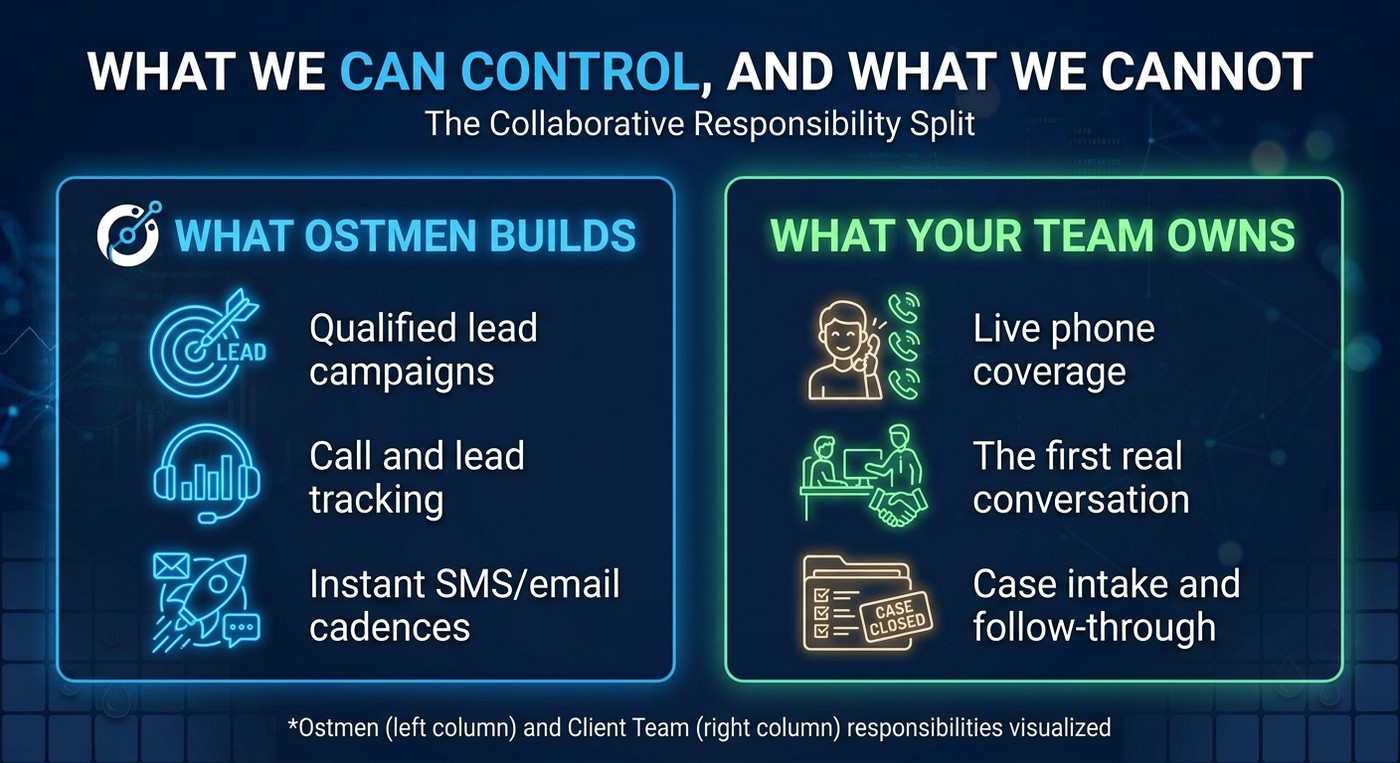
Here is the honest split, because pretending otherwise would not serve you. We build the campaigns that get qualified leads calling your firm. We build the tracking that tells you exactly where those leads come from. And we build the automated email and SMS cadences that follow up with every lead the instant they come in, so nobody falls through the cracks waiting for a human to notice.
What we cannot do is answer your phone for you. A law firm needs a live person, either in-house intake staff or an answering service built for legal intake, ready to have a real conversation almost instantly when a qualified lead calls. Automation can text back in seconds and keep a lead warm. It cannot replace the first live human conversation that actually signs a case. The firms that win combine both: instant automated engagement the moment a lead arrives, backed by a live team empowered and available to jump on the phone right behind it.
How to Actually Build a Speed-to-Lead System
The data on this is consistent and specific: companies using AI-powered or automated lead routing hit the 15-minute response standard roughly 60 percent more often than teams relying on manual processes alone. Systems beat good intentions every time. Here is what that system looks like in practice.
Every call and form fill gets tracked and routed the instant it arrives, no waiting for someone to check an inbox. An automated SMS and email sequence goes out immediately, confirming receipt and setting the expectation that a real person is calling shortly. At the same time, your intake team gets an instant alert, ideally with the caller's information and how they found you, so the follow-up call is not a cold restart. And every step of that sequence gets tracked back to the specific case type and source, so you know exactly which leads are converting and which are stalling in your own intake process, not just in your marketing.
A formal response-time standard makes a measurable difference on its own. Firms with a defined internal response SLA hit response benchmarks at nearly double the rate of firms with no formal standard, and that gap has nothing to do with how much your staff cares. It comes down to whether there is a system forcing the behavior every single time, on the tenth call of the day and not just the first.
The Bottom Line
Speed to lead is one of the rare places in legal marketing where the fix is almost entirely in your control, and it is also one of the most commonly ignored. We can build the campaigns, the tracking, and the automated cadences that make sure no lead sits untouched. What closes the loop is a live team ready to pick up the phone in minutes, not hours. Firms that get both pieces right sign meaningfully more of the cases their marketing is already paying to generate.
At Ostmen Marketing, we build the tracking, the routing, and the follow-up cadences that give your firm the best possible shot at being first.
Want to Know Where Your Leads Are Sitting Too Long?
Book a strategy call and we will show you exactly where your current intake process is losing cases.
Book a Strategy Call