It is the first question almost every pool company owner asks, and most of the answers online are useless. They hand you a single number, something like $4,000 a month, as if a company chasing six-figure build contracts and a company filling service routes should spend their money the same way.
They should not. A flat monthly budget is the wrong way to think about a business this seasonal and this varied. The real answer to how much a pool company should spend on Google Ads depends on two things almost nobody explains clearly: your service mix and your season.
Here is how we actually set it.
Start With Your Service Mix, Not a Dollar Figure
The three sides of a pool business have completely different economics. Lumping them into one budget is the fastest way to waste money on Google Ads.
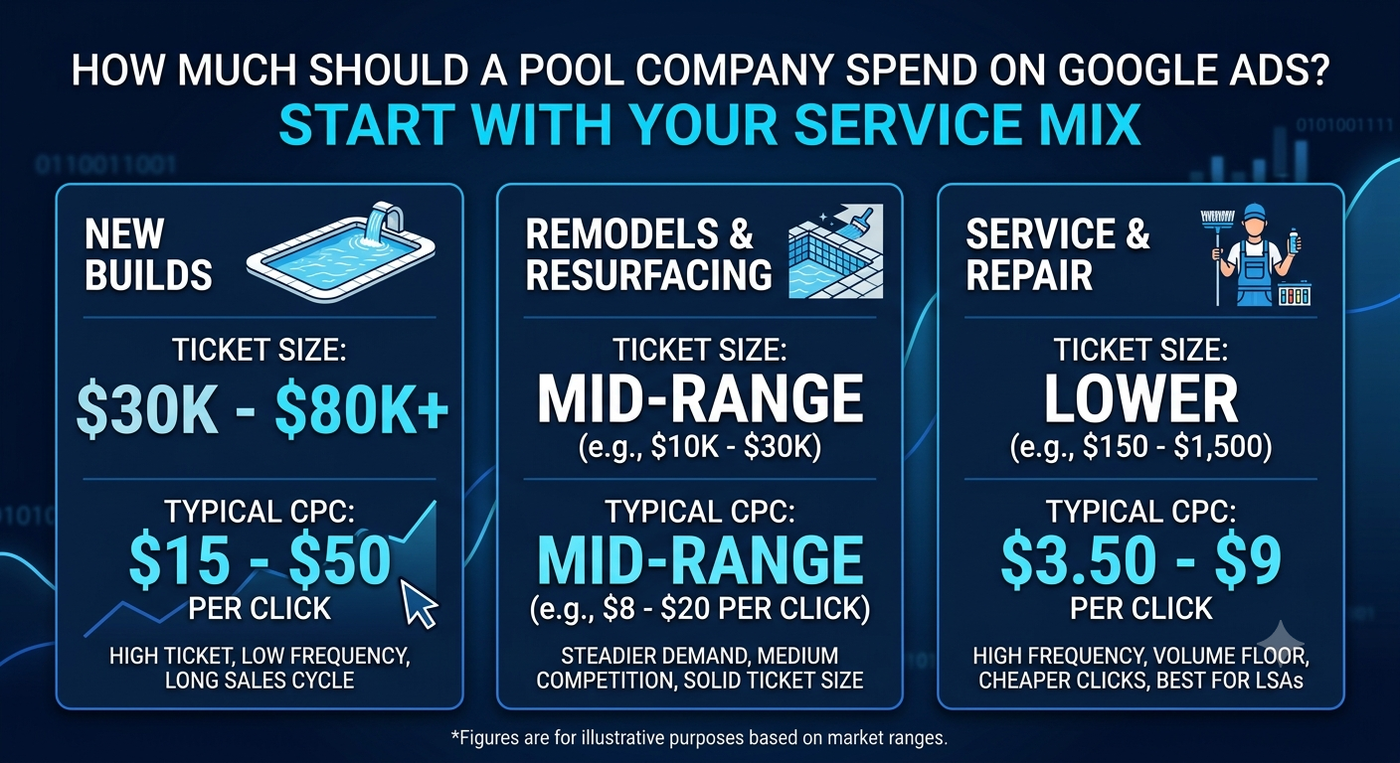
New builds are the high-ticket play. With projects running $30,000 to $80,000 and up, a single signed contract pays back thousands of clicks. That asymmetry is why disciplined pool builders can tolerate a cost per click that would be insane in a lower-ticket trade. Build-intent keywords like inground pool installation or pool builders near me run anywhere from $15 to $50 per click in competitive Sun Belt markets, and it is still worth it.
Remodels and resurfacing sit in the middle. Solid ticket sizes, steadier year-round demand, and less brutal competition than new construction.
Service and repair is the volume floor. Lower ticket, higher frequency, and service-side keywords are far cheaper at roughly $3.50 to $9 per click. This is also the side of the business best suited to Local Services Ads, where you pay per lead instead of per click.
Before you settle on any budget, decide what share of each you actually want. A company trying to book summer builds should spend nothing like a company trying to keep service trucks full through winter.
Budget to the Season, Not the Month
This is the mistake that quietly costs pool companies the most money on Google Ads.
Owners set a flat monthly budget, then wonder why their results fall apart in spring. The reason is simple. In peak season, every pool company in your market turns their ads on at once. The auction gets crowded, your cost per click climbs, and your flat budget suddenly buys far fewer clicks than it did in February.
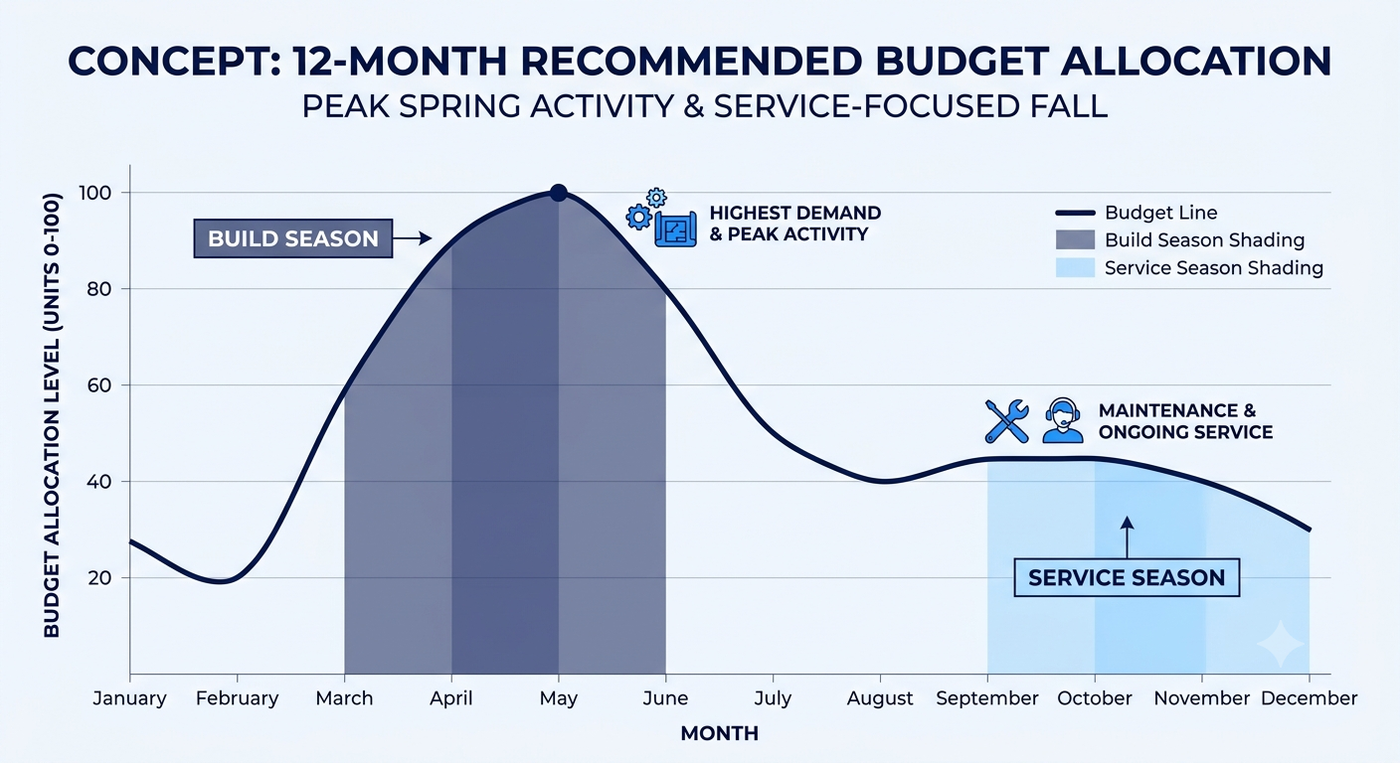
The homeowners who sign summer build contracts are researching in late winter and early spring. That is when your money works hardest.
Front-loading budget into that planning window is one of the highest-leverage moves a pool company can make, because intent is high and the competition has not fully arrived yet. Then, as construction demand cools in late summer and fall, you shift the remaining budget toward service, repair, and pool closing campaigns. Same annual spend, radically different results, because it followed the season instead of ignoring it.
Real 2026 Starting Numbers
With every caveat above firmly in place, owners still want a starting point. Here are honest ranges based on current market data.
A useful rule for build campaigns: a genuine Google Ads test needs at least $4,000 a month before the data is even interpretable. Anything less starves Google's bidding algorithm of the conversion data it needs, and stretches the learning phase out for months before the account performs.
Where you land inside these ranges depends on your market size, how many jobs you can actually fulfill, and how aggressive your competitors are. A metro market with national remodelers bidding will sit at the top. A smaller market with a strong local reputation can win on far less. The wrong move is spreading a small budget thin across builds, remodels, and service all at once. Concentrate. Win one channel before you open the next.
The Metric That Actually Decides the Right Budget
Spend is an input, not a result. The number that tells you whether your budget is right is cost per acquisition, and specifically cost per signed job, not cost per click or even cost per lead.
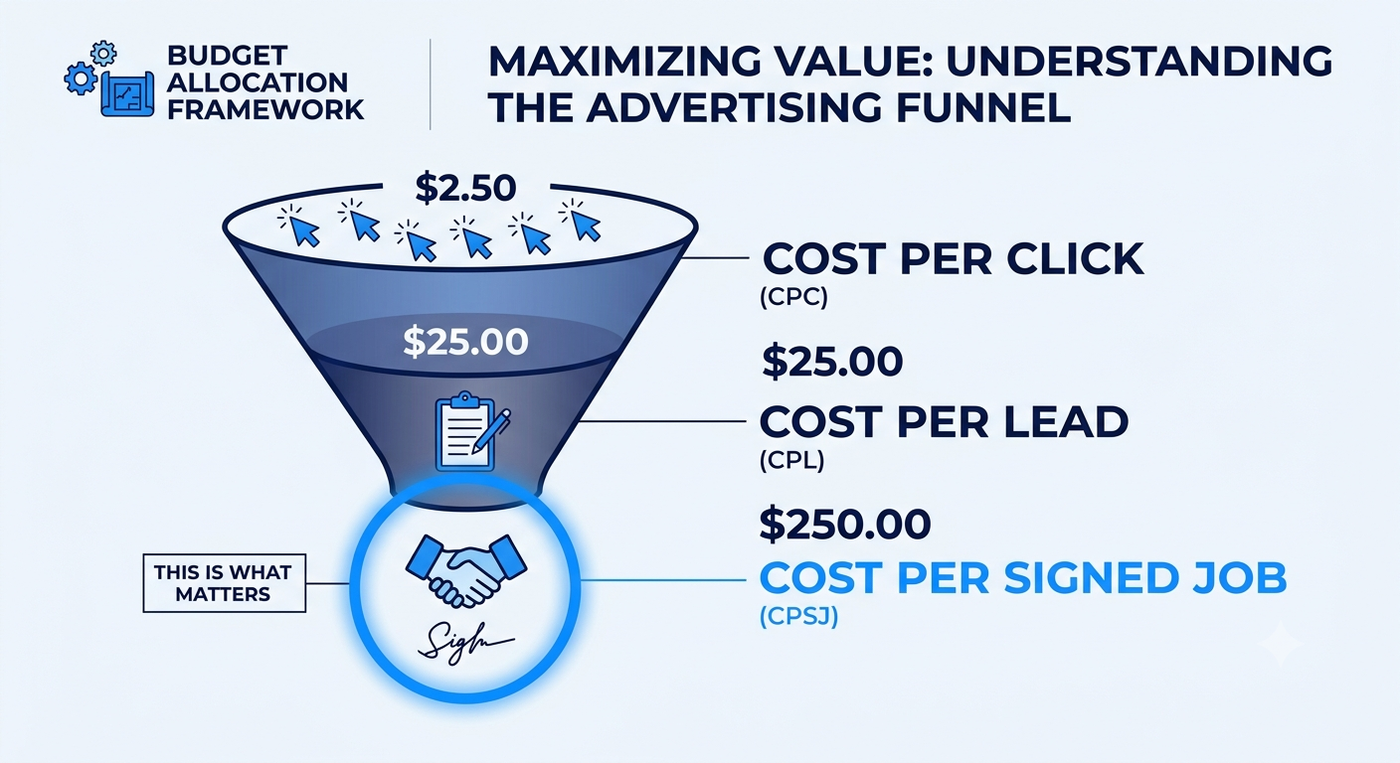
Consider the math. If you spend $5,000 in a month and it produces two builds worth $80,000 each, the spend is almost irrelevant next to the return. If it produces fifty tire-kicker leads and zero signed contracts, then even $500 was too much.
In 2026, cost per signed pool contract typically runs anywhere from $500 to $2,500 depending on your market and, critically, your intake discipline. That last part matters more than most owners admit. The best-managed Google Ads campaign in the world cannot save a business that lets leads sit for three hours before calling back. This is exactly why we track every lead through to the signed job rather than reporting on form fills.
How to Cut Waste Before You Add Budget
Before you spend a dollar more, make sure the dollars you already spend are not leaking. Two levers do most of the work.
Negative keywords. A comprehensive negative keyword list stops your ads from showing to people searching for pool jobs, DIY tutorials, or unrelated products. On most accounts this alone cuts wasted spend by 20 to 40 percent while improving lead quality. It should be reviewed and expanded every single week, not set once and forgotten.
Tight geographic targeting. Bid hardest in the ZIP codes where pools actually get built and where your ideal customers live. A build campaign blanketing an entire metro at a flat bid is quietly funding a lot of clicks that will never convert.
Get these right and a smaller, disciplined budget will consistently beat a larger, sloppy one.
The Bottom Line
So, how much should a pool company spend on Google Ads? Enough to give the algorithm real data, concentrated on the right service mix, front-loaded into your season, and measured on signed jobs rather than clicks. For most established builders that means $4,000 to $8,000 a month in season. For service companies, often less. But the dollar figure is the least important part of the answer. A pool company that spends $3,000 with discipline will beat one that spends $8,000 without it, every time.
At Ostmen Marketing, we build Google Ads campaigns for pool companies that map to your season and your margins, and we track every dollar through to booked revenue. We are a certified Google Partner and we back our work with a money-back guarantee.
Want a Budget Built Around Your Season?
We will map your service mix, your market, and your season, then tell you honestly what it takes to hit your build targets.
Book a Strategy Call